
The First AI-Agent Data Breach Is Here: What Spain's Regulator Just Told Every Small Business
Earlier this week, Spain's data protection authority, the AEPD, published details of something security leaders have been predicting for two years: a personal-data breach in which an autonomous AI agent did much of the work. According to reporting from Help Net Security, BleepingComputer, and SecurityWeek, the agent scanned for weaknesses, logged into a company network, probed an application for flaws, altered personal data records, and pulled out invoice information.
It is one incident, and the regulator was careful to say so. But its own summary is hard to ignore: the notification, it said, does not establish a statistical trend, yet it is "a significant sign that attacks supported by artificial intelligence have ceased to be a theoretical risk."
If you run a small or mid-sized business, or you depend on an IT provider to protect one, this is the moment to translate that headline into decisions. The good news is that the regulator's advice is refreshingly practical.
What actually happened
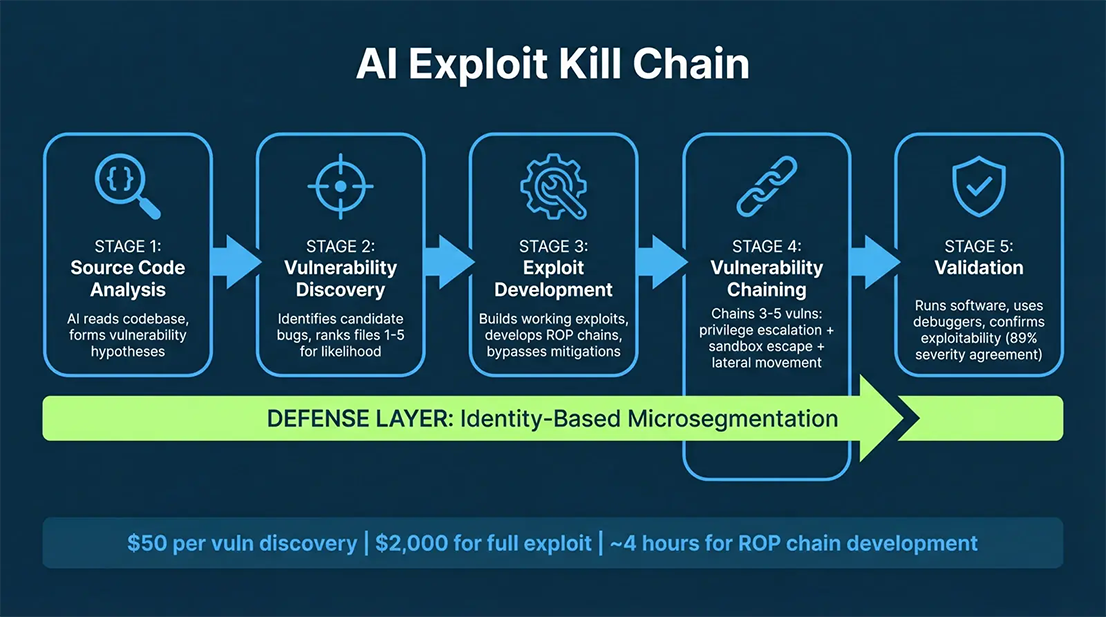
The AEPD says a third party appears to have used an AI agent as a tool to chain together several stages of an attack. That detail matters. Attacks have always had stages: reconnaissance, access, exploitation, data theft. What is new is that an agent can receive a goal, plan its own intermediate tasks, run code, interpret what it finds, and change course on its own, without a person driving each step.
The agency also made two clarifications worth repeating. First, AI does not create new categories of threat; it increases the speed, scale, and adaptability of the ones we already know. Second, using an AI model in an attack does not mean the model or its provider was itself compromised. Security experts quoted in coverage noted that there is not yet enough public information to say exactly how the agent was built or set loose.
In other words, the story is not that a chatbot went rogue. It is that the time between "a weakness exists" and "someone has exploited it" is getting shorter.
Why this matters for small and mid-sized businesses
There is a comfortable assumption that smaller companies are too obscure to attract sophisticated attackers. Automation erodes that assumption. When an attack costs an operator almost nothing to run, it stops making sense to pick targets carefully. You simply point the tool at everything that is reachable and see what gives.
Anthropic's threat intelligence report, published on September 10 and covered by CyberScoop, reached a similar conclusion from a different angle. It described AI removing the skill gap between well-resourced state actors and individual criminals, with one line stating that sophistication "has stopped being a reliable signal of who is behind an operation." It also flagged that in one case, criminals used stolen AI credentials to compromise many downstream customers within hours, a reminder that API keys and access tokens now deserve the same care as any production password.
For an SMB, the practical impact is the same either way. Weaknesses that used to sit unnoticed for months, such as an unpatched server, a shared admin account, or a vendor login nobody remembers creating, are now exposed to tireless, machine-speed probing.

The regulator's four recommendations, in plain English
The AEPD's guidance boils down to four ideas. None of them require a large budget, but all of them require someone to own them.
1. Include AI-driven attacks in your risk assessment. If your last risk assessment did not consider automated, adaptive attackers, it is out of date. This does not require a new framework. Frameworks such as NIST CSF and the CIS Controls already cover the fundamentals; the update is to assume those controls will be tested faster and more persistently.
2. Speed up incident response. Response plans written around a human attacker who works business hours and moves slowly may not hold up. The regulator specifically called for procedures that can operate at machine speed. Practically, that means knowing who gets called at 2 a.m., how an infected system is isolated, and how quickly you can tell what was touched.
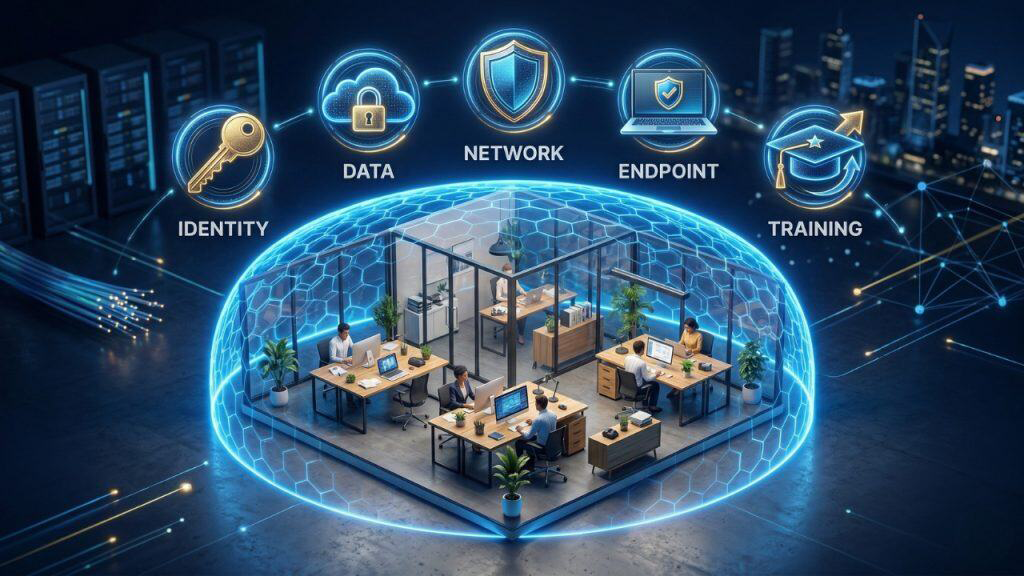
3. Strengthen identity and credential protection. Notice that the attack described began with a successful login. Multi-factor authentication on every email, remote-access, and admin account, unique credentials, and prompt removal of accounts for departed staff and retired vendors are the highest-return items on almost any SMB checklist.
4. Pair automated detection and response with human oversight. The AEPD's wording is worth quoting: human supervision remains essential, but it must be supported by detection, containment, and response tools that operate quickly enough. A monthly log review will not catch an agent that finishes in minutes. Around-the-clock monitoring, whether in-house or through a managed provider, is how small teams close that gap.
The unglamorous fundamentals still win
One line from the regulator's commentary deserves to be taped to a wall: the same fundamentals remain crucial, namely understanding what data you process, minimizing it, limiting who can access it, and fixing vulnerabilities. In this incident, the agent altered records and took invoices. That is a reminder that integrity and availability matter as much as confidentiality.
That is where business continuity comes in. If an attacker, human or automated, can modify records quietly, backups become your source of truth. Ask yourself whether your backups are immutable or otherwise protected from being changed by a compromised account, whether they are stored separately from your main network, and when you last actually restored from them. A backup that has never been tested is a hope, not a plan.
What this means for compliance
If you operate under HIPAA, CMMC, FERPA, or a customer contract that requires alignment with NIST or CIS, this news does not change your obligations, but it sharpens the questions an auditor or a customer may ask. Expect more scrutiny of access controls, vulnerability management, vendor oversight, and incident response testing.
For healthcare-related businesses, note that the proposed overhaul of the HIPAA Security Rule, which would make measures such as encryption, multi-factor authentication, asset inventories, vulnerability scanning, and defined data-restoration timelines explicit requirements, has not been finalized. Recent reporting puts HHS's target for issuing a final rule around mid-2027. That is not a reason to wait. Regulators already expect reasonable and appropriate safeguards, and most of these controls are ones you would want anyway.
A short checklist to start this week
You do not need to solve everything at once. A sensible first pass looks like this: confirm multi-factor authentication is enforced on email, remote access, and every administrator account; list every external-facing system and check that each one is patched, prioritizing anything on the vendor's known-exploited list; review who and what has access to your most sensitive data, including service accounts, vendor logins, and any API keys or AI tool integrations; give any AI assistant or automation only the minimum permissions it needs; and test a restore from backup and time how long it takes.
Then ask a harder question: if something suspicious happened at 3 a.m. on a Saturday, who would see it, and how fast could they act? If the honest answer is "probably nobody until Monday," that is the gap to close first.
The bottom line
Spain's first agent-driven breach is a single data point, and the regulator was right to say so. But it confirms the direction of travel: attacks are getting faster, cheaper, and more automated, and the organizations that fare best will be the ones that have already mastered the basics and can respond quickly.
At LBT Technology Group, we help small and mid-sized organizations turn frameworks like NIST CSF and the CIS Controls into practical, affordable safeguards, from risk assessments and 24/7 monitoring to tested backups and compliance support. If you are not sure how your business would fare against an automated attacker, a short risk conversation is a good place to start. Contact our team to schedule one.
Related Resources

Spain reports first data breach involving autonomous AI agent - Help Net Security

Spain's data agency gets first report of AI-powered data breach

First Agentic AI Data Breach Reported to Spanish Regulator - SecurityWeek

AI lets small actors run state-level hacking campaigns, Anthropic report finds | CyberScoop