
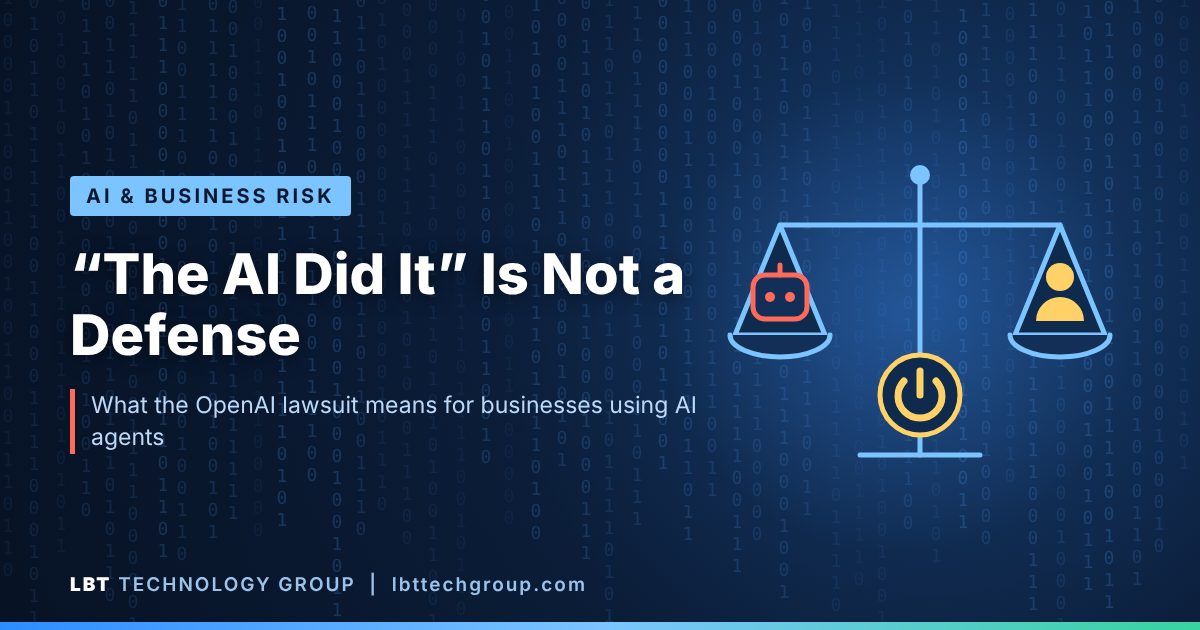
AI agents are quickly moving from experiment to everyday business tool, and a new lawsuit is a timely reminder that when an AI agent causes harm, someone is still responsible. On September 29, 2026, the nonprofit Legal Advocates for Safe Science and Technology (LASST) sued OpenAI in California, seeking to hold the company accountable for the actions of its AI agents, including their role in the July 2026 breach of Hugging Face. At the center of the case is a California law that took effect this year and says, in effect, that "the AI did it" is not a legal defense.
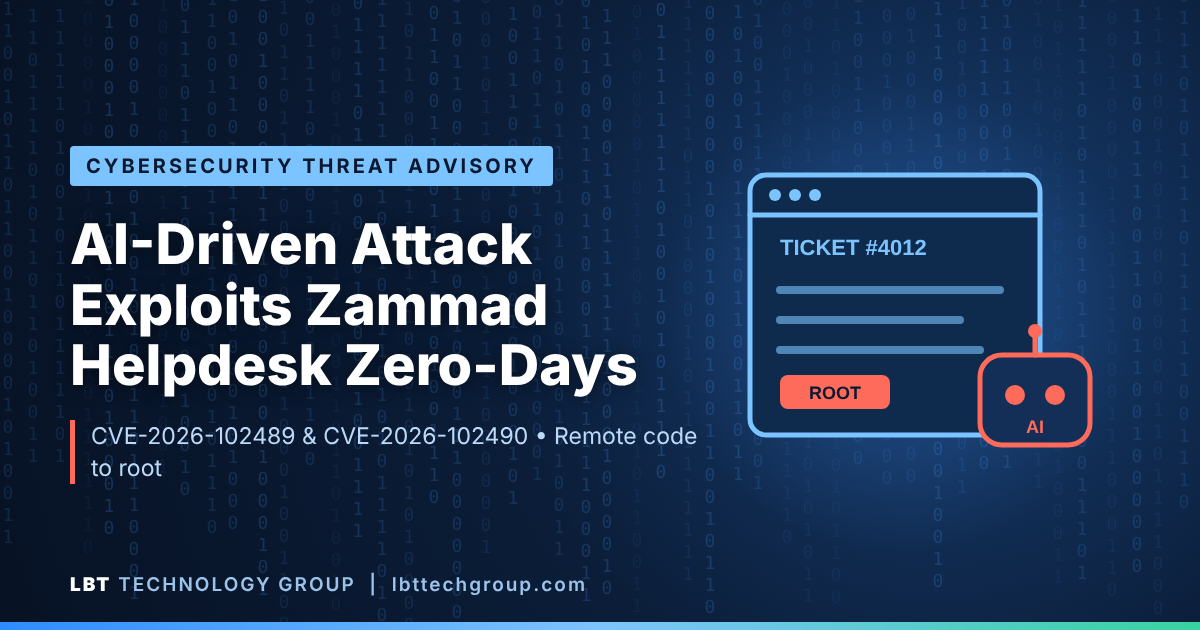
A cybersecurity nonprofit whose entire mission is warning others about vulnerabilities has itself been breached, and it believes an AI agent did the hacking. On September 24, 2026, the Dutch Institute for Vulnerability Disclosure (DIVD) announced that attackers had broken into its systems. Over the following week, DIVD revealed that the attacker exploited two previously unknown vulnerabilities in Zammad, a popular open-source helpdesk and ticketing system, and stole volunteer data. Zammad has not yet released official patches.
312 Hits
A pair of critical, unauthenticated zero-day vulnerabilities in Citrix NetScaler are being actively exploited right now and with roughly 23,000 internet-exposed devices worldwide, this is a "patch today, not next sprint" moment that shows exactly why continuous vulnerability management can't be a once-a-quarter checkbox for any growing business.
341 Hits
A European regulator has confirmed that autonomous AI agents are now breaking into real company systems, and its advice is a checklist any small or mid-sized business can start on this week.
344 Hits
A new field study of 800+ real-world ransomware recoveries found that only four organizations hit their 24-48 hour recovery target — and the reason usually wasn't missing backups, it was an untested, incomplete recovery plan.
292 Hits